
Safe Repair & Troubleshooting
Troubleshooting & Repairing Safes In Greater Houston And Beyond
Safes are complex systems: steel bodies, heavy doors, hinges, boltworks, relockers, and mechanical or electronic locks all have to work together. When any part of that system begins to fail, you may notice small warning signs before the safe stops opening entirely.
Our safe locksmiths diagnose and repair a wide range of safe issues, from minor operational problems to complete failures, with the goal of restoring safe, reliable operation without unnecessary damage.
Call 832-534-8687, or text (including images) 832-493-5888 to discuss safe lock replacement and upgrade services with a locksmith professional today.
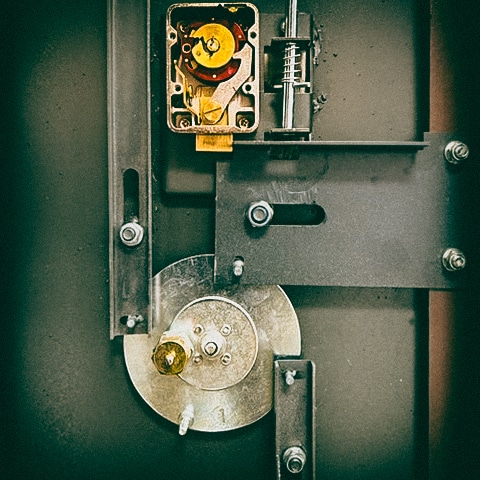
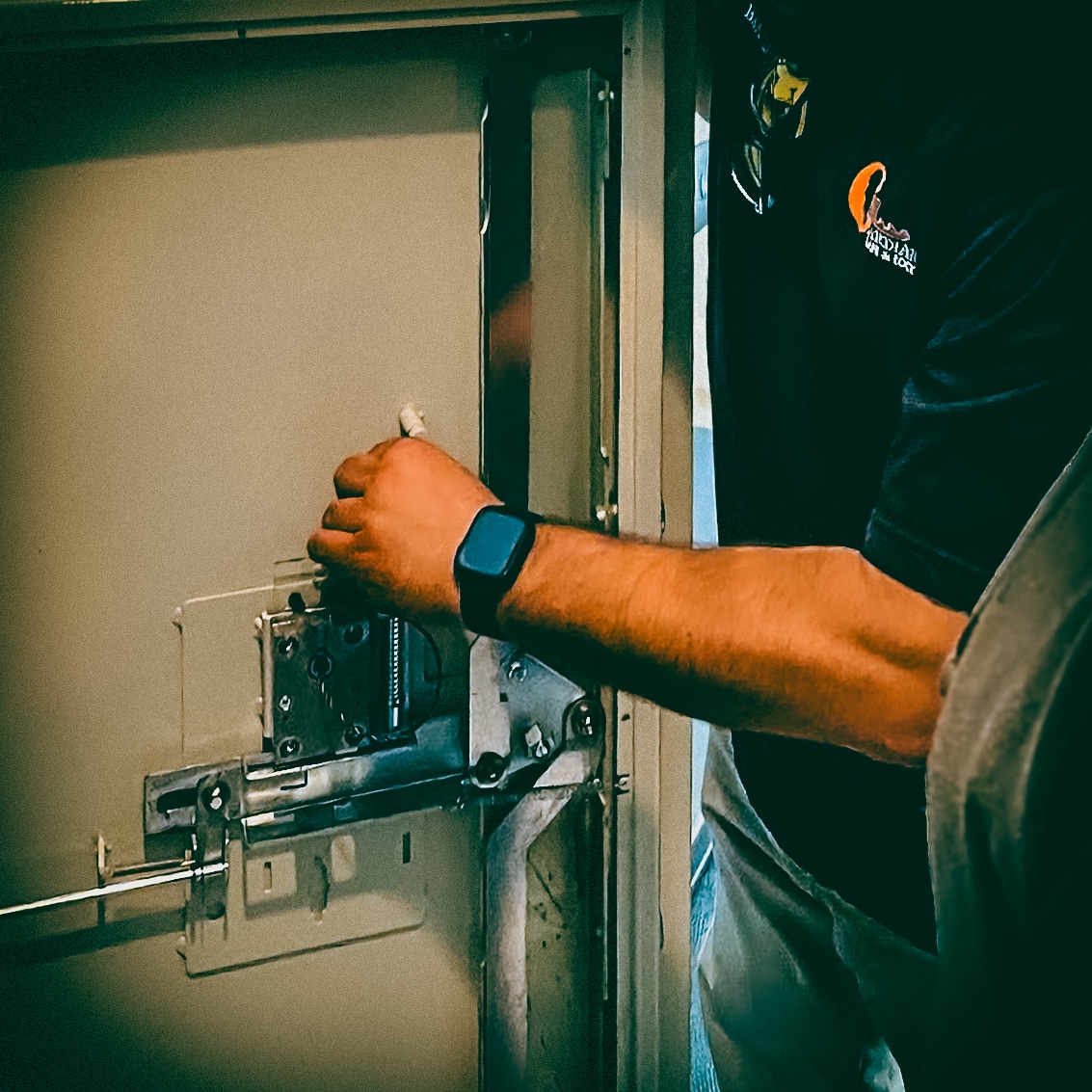
Common Safe Problems We See
Over time, normal use, environment, and previous work can all affect how a safe operates.
Some of the most common issues we encounter include:
- Handle problems – Handles that feel loose, hard to turn, or that turn without retracting the bolts.
- Door alignment issues – Doors that rub, drag, or do not close squarely, sometimes causing difficulty locking or unlocking.
- Sticking or sluggish boltwork – Bolts that move stiffly or do not fully extend or retract without extra force.
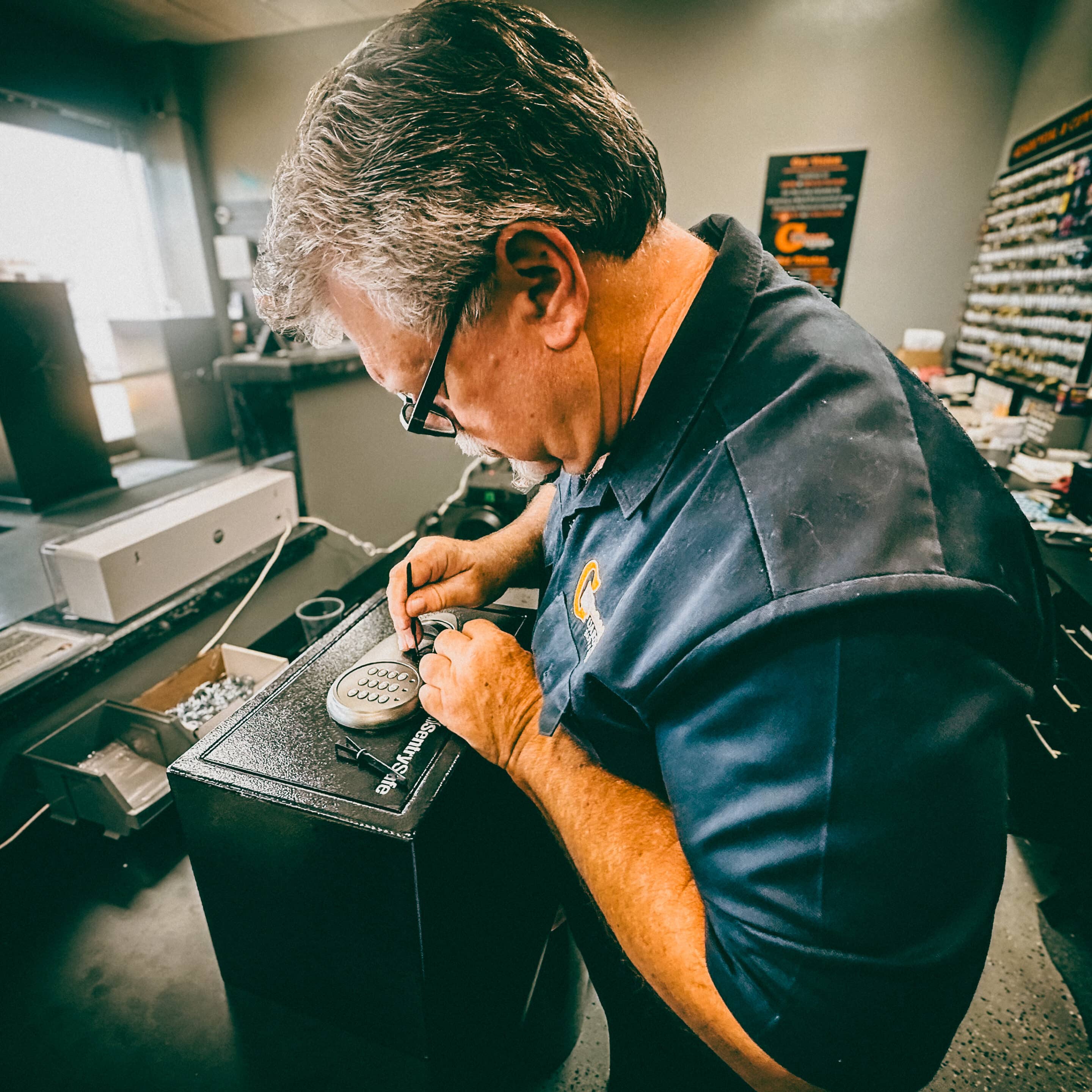
- Electronic keypad failures – Keypads that miss keystrokes, lose power, show errors, or fail intermittently.
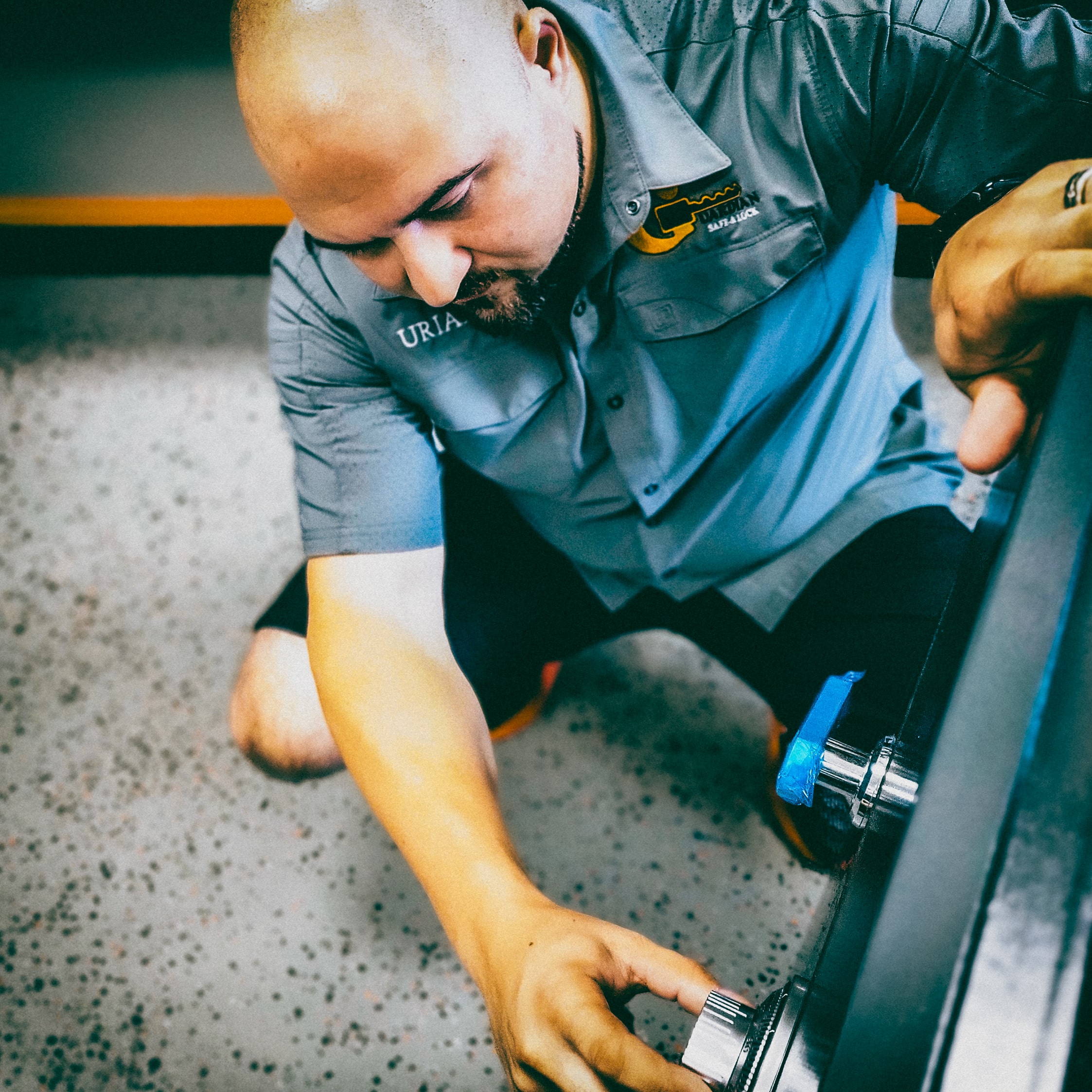
- Mechanical dial concerns – Dials that feel rough, inconsistent, or require “hunting” for the correct opening point.
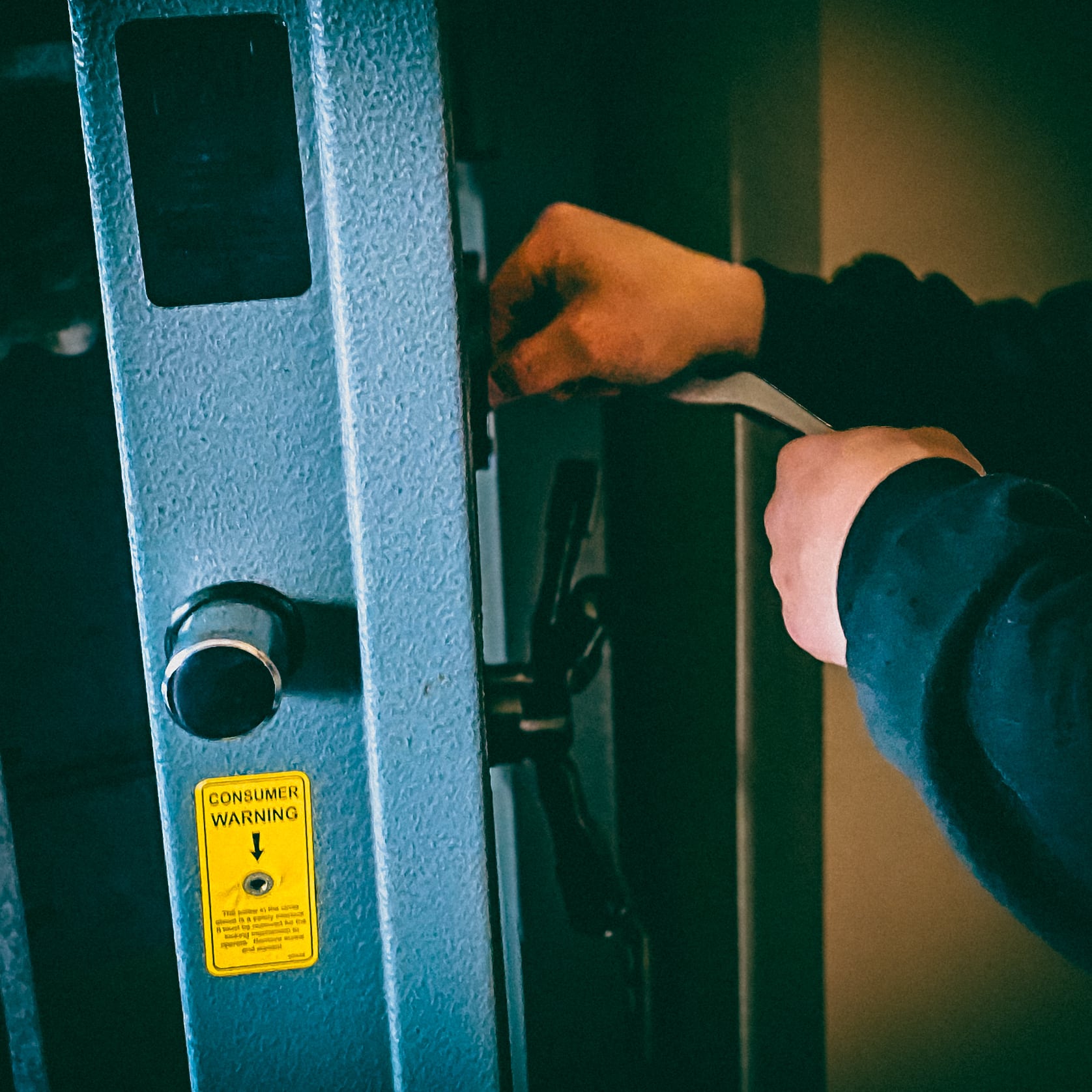
- Aftermath of attempted break‑ins or impact – Bent doors, damaged hinges, or compromised locking components.
These symptoms can worsen over time. Addressing them promptly can help avoid a full lockout and reduce the risk of additional damage to the safe.
Our Approach to Safe Troubleshooting
Every safe and situation is a little different, so we start by gathering as much information as possible before and during the visit.
A typical troubleshooting process includes:
-
Initial intake and questions
We ask what the safe is doing now, how it behaved previously, and whether anything changed recently (such as a move, remodel, impact, or new users). -
Visual and physical inspection
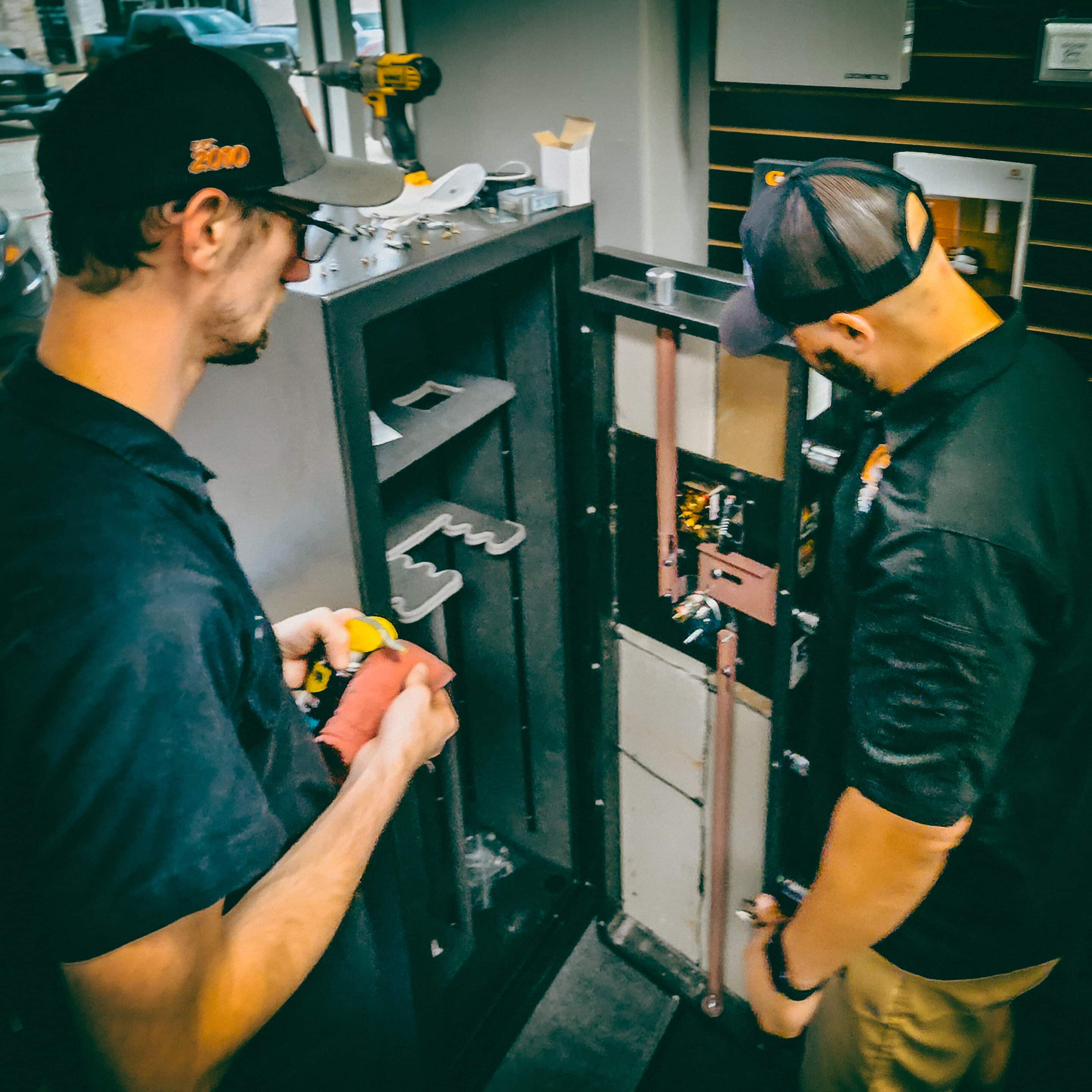
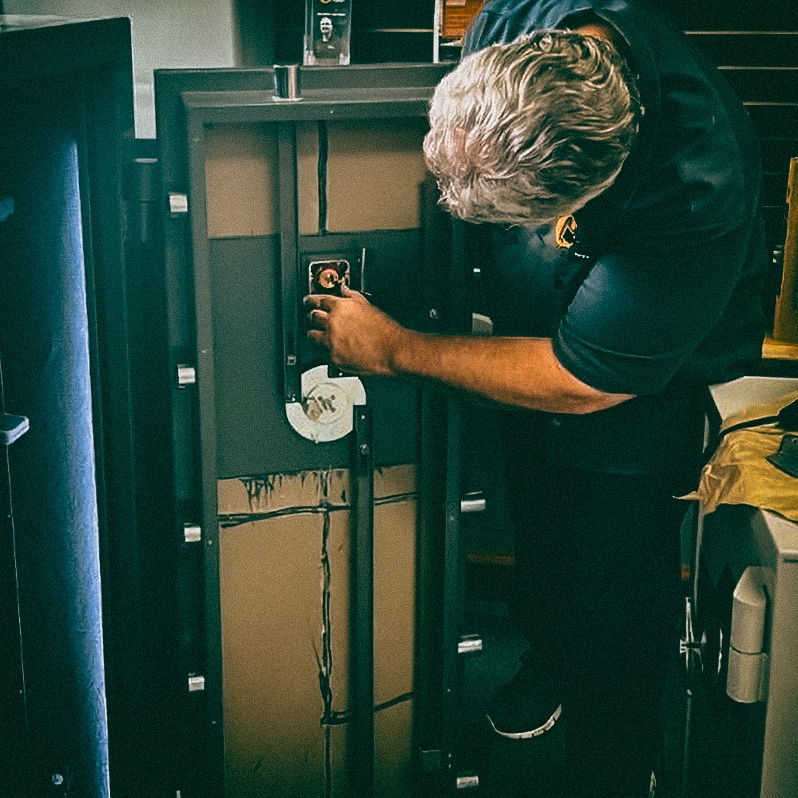
On site, we examine the safe’s exterior, door, hinges, bolts, and lock. We look for signs of misalignment, wear, or previous damage and test the handle and locking mechanism carefully. -
Lock and boltwork testing
We test the lock, handle, and bolts with the door open when possible, so we can observe how components move without risking a lockout. For electronic locks, we also check batteries, connections, and keypad behavior. -
Diagnosis and explanation
Once we identify likely causes, we explain the problem in plain language and outline the repair options, including any risks, limitations, or recommended upgrades. -
Repair or further action
With your approval, we perform the agreed‑upon work, then re‑test the safe multiple times before considering the job complete.
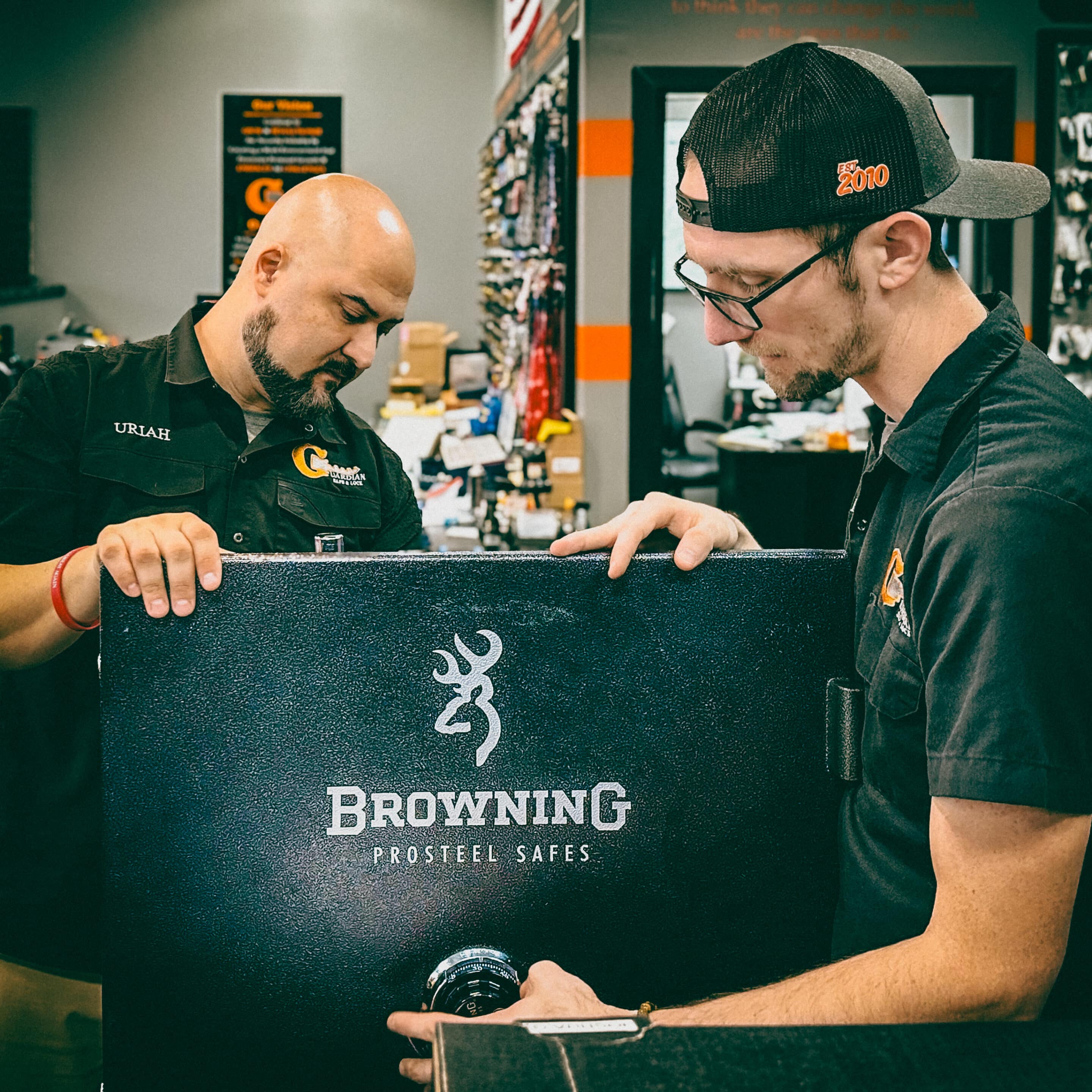
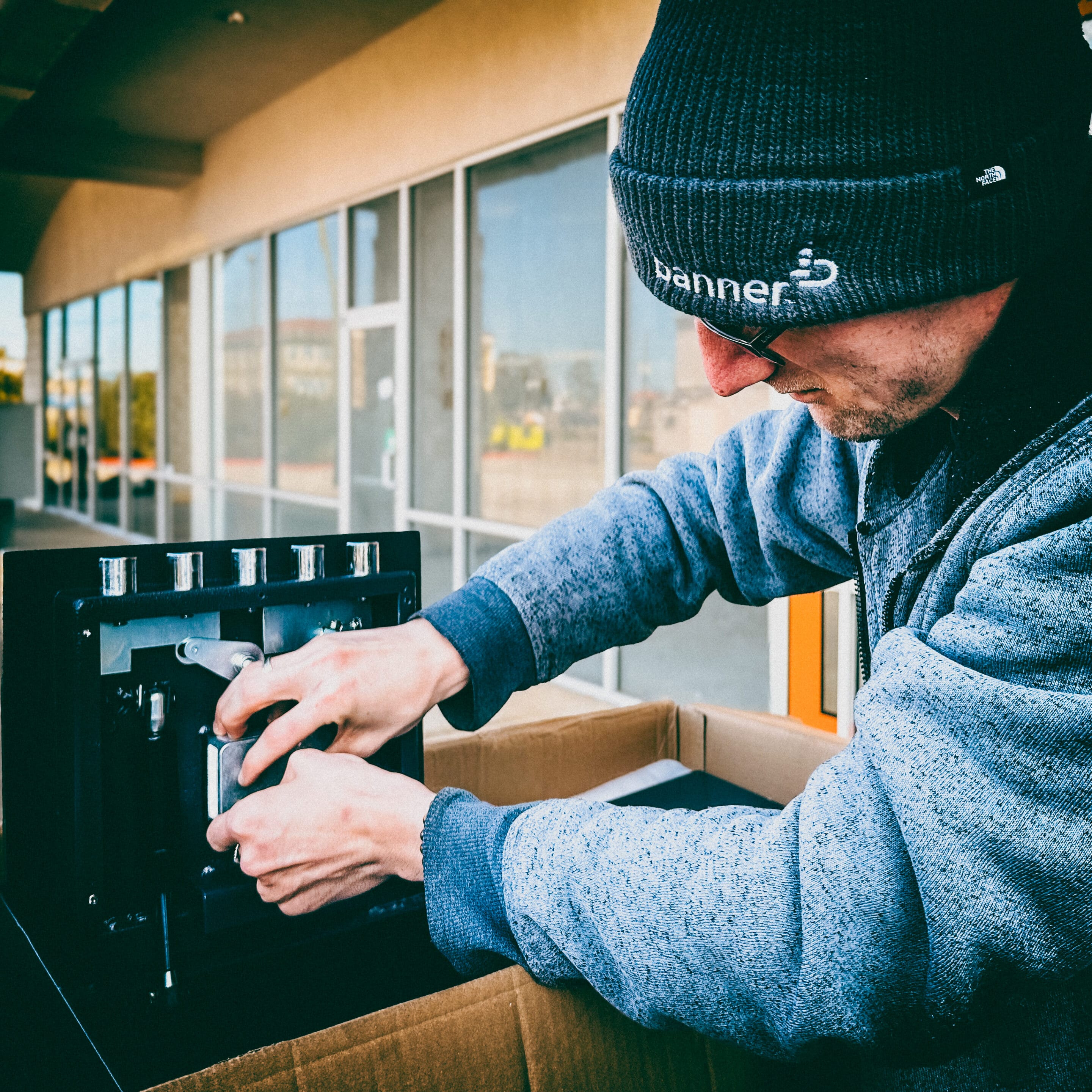
Structural Issues: Doors, Hinges, and Boltwork
Structural problems often show up first as small changes in how the safe feels to use. Ignoring those changes can lead to sudden failures.
We address issues such as:
- Door sagging or rubbing – Often caused by hinge wear, heavy doors, or previous movement of the safe; we can adjust or repair components to restore proper alignment where feasible.
- Sticking bolts or stiff handle movement – May be related to internal wear, contamination, or misalignment; we inspect, clean, lubricate suitable components, and adjust where appropriate.
- Bent or damaged parts after impact or attempted forced entry – Depending on severity, some components can be repaired or replaced; in more serious cases, we discuss whether the safe can still be trusted for its original purpose.
Structural repairs are always done with an eye toward long‑term reliability, not just short‑term movement.
Electronic Lock & Keypad Problems
Electronic safe locks offer convenience but depend on power and internal electronics that can degrade or fail over time.
We commonly address:
- Keypads that only work intermittently or require repeated attempts.
- Locks that show error codes or fail to respond to valid codes.
- Battery‑related issues, including poor connections or unsuitable battery types.
- Internal electronic lock failures that prevent opening even with the correct codes.
Where possible, we correct issues with power, wiring, or programming. If the underlying electronic lock or keypad is failing, we will explain replacement options and when a full lock upgrade may be a better long‑term solution than repeated repairs.
Mechanical Dial Lock Issues
Mechanical combination locks are durable, but their internal wheels, levers, and other components can wear or drift out of ideal adjustment.
Signs of trouble include:
- Needing to “creep up” on the same number repeatedly before it opens.
- A dial that feels rough, loose, or inconsistent.
- Small changes in the combination’s effective opening point.
Depending on the lock’s condition, we may be able to correct minor issues through adjustment and service, or we may recommend replacing the lock body to restore reliability. As with electronic locks, we will clearly explain when replacement is preferable to continuing to rely on a marginal mechanism.
Repair vs. Replacement: How We Decide Together
Not every problem needs a new lock or a new safe, but not every safe is a good candidate for extensive repair either. We help you weigh:
- Age and overall condition of the safe and lock.
- Severity and frequency of the problems.
- Importance of what you are protecting and your tolerance for future risk.
- Availability of parts for your particular safe and lock model.
In some cases, a focused repair and adjustment is sufficient. In others, especially where parts are failing or obsolete, we may recommend a lock replacement, a planned upgrade, or even discuss whether the safe itself still meets your security needs.
When a Safe Will Not Open at All
If your safe is already locked shut and will not open, repair and troubleshooting start with safe opening.
In these situations, we:
- Gather details about the safe, its history, and what led up to the lockout.
- Determine whether non‑destructive methods may work based on the lock type and symptoms.
- Use professional techniques appropriate for the lock and safe design; if drilling or other invasive work is necessary, it is done carefully and in a controlled way.
Once the safe is open, we can fully inspect and test the internal components, then perform repairs, replace the lock, or plan upgrades as needed.
Integrating Repairs With Other Safe Services
Safe repair and troubleshooting often go hand‑in‑hand with other services. While we are already working on the safe, it may be a good time to also:
- Perform a fresh combination or code change if security needs to be updated.
- Replace or upgrade a lock that has been a recurring problem.
- Evaluate whether the safe’s current location and anchoring are still appropriate, especially after moves or remodels.
Combining related work into a single visit can reduce downtime and ensure the entire safe system is addressed, not just the most obvious symptom.
Who Benefits From Proactive Safe Repairs
Proactive repair and troubleshooting are particularly important for:
- Businesses that rely on safes for daily cash handling, deposits, or inventory.
- Households where a gun safe or document safe must open reliably in emergencies.
- Owners of older or heavily used safes showing early warning signs of trouble.
- Anyone who has already experienced a near‑lockout or recurring difficulties opening the safe.
In these cases, waiting until the safe fails completely can lead to more disruption and higher costs than addressing the problem early.
Service Area & Scheduling
Based in Tomball, we serve the Greater Houston area, including (but not limited to) the surrounding suburbs:
Tomball • Bryan • College Station • Conroe • Cypress • Humble • Katy • Kingwood • Magnolia • Pasadena • Porter • Spring • Sugar Land • The Woodlands • & more!
If you are outside these areas, we may still be able to service you: Call 832-534-8687 to confirm availability.
When you contact us, it helps to be ready with:
-
A description of the safe (type, approximate size, and brand if known).
-
The current problem and any changes you have noticed over time.
-
Whether the safe is currently open or locked.
-
Photos of the safe, lock, and door (when possible).
With that information, we can outline likely causes, discuss options, provide an estimate, and schedule a service visit that fits your home or business.
My safe still opens, but the handle is getting harder to turn. Should I be worried?
Yes.
A handle that is getting noticeably harder to turn is often an early warning sign that something in the boltwork, hinges, or lock is binding or wearing out.
If you wait until it fails, the safe may end up locked shut and require more time‑consuming and costly work to open; it is much better to have it inspected and serviced while it still opens reliably.
Why does my electronic safe sometimes accept my code and other times do nothing?
Intermittent behavior on an electronic safe lock is usually related to weak batteries, poor power contact, keypad wear, or internal lock issues.
We start by checking batteries, connections, and keypad performance; if those are not the cause, the problem may be inside the lock body itself, and we will explain whether repair or replacement is the most dependable solution.
My mechanical dial safe only opens if I “hunt” around the numbers. Is that normal?
No.
Having to “hunt” around the numbers or try slightly different stopping points is a sign that the mechanical lock is drifting or wearing internally.
While it may still open for now, this behavior indicates the lock is no longer operating within its ideal tolerances; it should be inspected and either properly adjusted or replaced to avoid an eventual lockout.
Can you repair a safe that was damaged in an attempted break‑in?
In many cases, yes, but it depends on the extent and location of the damage.
We inspect the safe body, door, hinges, and locking components to determine whether they can be repaired to a level you can trust; if the structure or locking system has been compromised beyond what repair can reasonably restore, we will explain your options and, if appropriate, discuss replacement.
What information do you need before coming out to troubleshoot my safe?
Before a service visit, it helps if you can tell us whether the safe is currently open or locked, describe the problem (sticking handle, keypad issues, dial concerns, door rubbing, etc.), and provide the brand or model if you know it.
Photos of the safe, the lock area, and any visible damage are also very useful; with that information, we can come better prepared, give you more accurate expectations, and choose the right approach to repair and troubleshooting.
Ready to Address a Problem With Your Safe?
If your safe is becoming harder to operate, has already failed once, or is showing any signs that something is not right, now is the time to speak with a safe locksmith.
Contact our professional safe locksmith team:
Call: 832-534-8687 (click to call on mobile)
Text: 832-493-5888 (Tap to text, including images)
Visit: 27920 Tomball Pkwy, Ste. 240, Tomball, TX 77375
Email: [email protected]
A focused repair and troubleshooting visit can restore confidence in your safe, reduce the risk of sudden lockouts, and help you decide whether additional steps—such as lock upgrades, combination changes, or installation adjustments—are appropriate for how you rely on your safe every day.
Other Security & Locksmith Services We Offer
Looking for more security options? You can also call, text, or email us about other options, including:
- Residential locksmith services (Including Mailbox, Gate & Exterior Residential Locks, Residential Door Hardware Upgrades, Residential Key Duplication & Spare Keys, Residential Lock Installation & Replacement, Residential Lock Repair & Troubleshooting, Residential Rekey Services, and Smart Locks & Keyless Entry)
- Automotive locksmith services (Including broken car key removal, automotive rekeying, laser-cut car key duplication, ignition & door cylinder repair, key fob programming, specialty vehicle keys, transponder key programming, and VIN-code key generation.
- Intercom Systems (Audio & Video)
- Access Control system installation (including automatic door openers, card access & mobile credentials, commercial buzz-in systems, commercial keypad locks, electric strikes, magnetic locks, and other forms of electronic door hardware.
- Surveillance Cameras (Including Eagle Eye Networks, Alibi, and Hikvision systems)
- Audio & Video Intercom Systems (Audio & Video)
- Emergency locksmith services
- Houston Safes & Houston Gun Safes (including sales & services)