
 What to Look for in a Gun Safe: A Comprehensive Guide
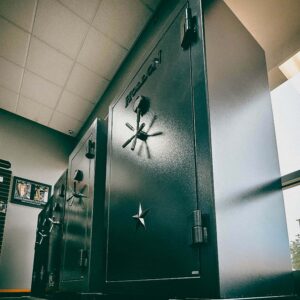 What to Look for in a Gun Safe: A Comprehensive Guide
Owning firearms comes with great responsibility, and one of the most important duties is ensuring they are stored safely and securely. Whether you’re a gun enthusiast, a hunter, or simply a homeowner wanting protection, having a reliable gun safe is essential for both preventing unauthorized access and protecting your firearms from damage. Choosing the right gun safe involves considering several key factors, such as security features, size, fire resistance, and more. Today your favorite Houston locksmith will walk you through the most important aspects to look for in a gun safe, helping you make an informed decision.
1. What to Look for in a Gun Safe: Understanding Your Storage Needs
Before diving into the various features and specifications of a gun safe, the first step is understanding your specific storage needs. Consider the following questions:
- How many firearms do you need to store?
- Do you plan on adding more guns to your collection in the future?
- Will you need extra space for ammunition, accessories, or other valuables?
Gun safes come in a range of sizes, from small handgun safes to large units capable of storing dozens of rifles. Ensure that the safe you choose has enough capacity for your current firearms, with some room for future purchases. Most gun safes will list their capacity in terms of the number of long guns they can hold as part of the part number (e.g. “BHS-39E” is the part number for a Hollon Blackhawk 39 safe with an electronic keypad. The 39 in the part number confirms this aspect).
Be mindful that advertised capacities are usually just the number of barrel rests in the safe, and often don’t account for scopes, extended magazines, and/or other attachments. It’s always wise to choose a safe larger than your current needs, in particular, if you account for these firearm attachments.
2. What to Look for in a Gun Safe: Construction and Materials
Gun safe construction is a critical factor in determining its durability and resistance to tampering. Your local Humble locksmith recommends you look for safes made from high-quality materials that can withstand both physical attacks and environmental hazards. A plastic or incredibly thin metal “safe” may contain more and be cheaper, but it won’t offer the same security and peace of mind as a sturdier unit.
The thickness of the steel used in the walls and door of a gun safe is measured in gauge, with lower numbers indicating thicker steel. For example, a 10-gauge steel safe is significantly thicker and more secure than a 16-gauge safe. As a general rule, safes with a steel gauge of 12 or lower (Remember: the lower the gauge the thicker the steel) are recommended for optimal security.
The door is the most commonly attacked part of a safe. Look for gun safes with solid steel doors that are at least ¼ inch thick. Some higher-end safes also feature composite doors, which have multiple layers of material for added protection. In addition; be sure to keep an eye out for design choices such as multi-recession doors, seals, relockers, and anti-drill plates.
The locking bolts secure the door to the frame when locked, preventing it from being pried open. High-quality gun safes have multiple bolts around all four sides of the door, rather than just the top and bottom. Safes with larger, thicker bolts (at least 1 inch in diameter) offer greater resistance to forced entry.
3. What to Look for in a Gun Safe: Locking Mechanism Options
The locking mechanism is one of the most important aspects of a gun safe, as it directly impacts how secure and accessible your firearms will be. Gun safes can come with several different types of locks, each with its pros and cons.
Mechanical Dial Locks
These traditional combination locks are highly reliable and do not require batteries or electricity. However, they may be slower to operate, which could be a disadvantage in emergency situations. It also can be incredibly difficult to change the combination on these locks as an end-user, leaving you prey to service charges and the availability of your local safe locksmith.
Electronic Keypad Locks
Electronic locks are fast and easy to use, allowing you to unlock your safe with a numeric code. While convenient, electronic locks rely on batteries, so you’ll need to replace them periodically. Some higher-end models feature additional options, such as an integrated light source, audit trails, time-delay opening options, and EMP resistance to prevent electrical attacks or incidents.
Biometric Locks
These safes use fingerprint recognition technology for quick, easy access. Biometric locks can seem highly convenient, especially in situations where you need to access your firearms quickly. However, they are often considerably more expensive and not as effective as fingerprint or face scanners commonly used in smartphones, making them easier to bypass and harder to operate in some cases than a standard electronic keypad.
Key Locks
Safes that are opened either primarily or secondarily by a mechanical key are usually billed as a convenience feature, though in almost all scenarios are weaker than a traditional dial or keypad. Most “safes” that use a keyed cylinder for operation are easy for criminals to get into due to the weakness of the lock itself allowing it to be drilled out and bypassed quicker than other options.
4. What to Look for in a Gun Safe: Fire Resistance
Fire resistance is one of the more important answers to the question of what to look for in a gun safe. While no safe is completely impervious to fire, many are designed and rated to offer a degree of protection.
Fire ratings are typically measured in terms of time and temperature. A good fire-resistant gun safe should be able to withstand at least 1,200 degrees Fahrenheit for 30 minutes. Higher-rated safes can endure longer periods of intense heat, with some offering protection for up to 120 minutes or more. Look for gun safes that have been independently tested and certified by reputable organizations like Underwriters Laboratories (UL) to be sure what you’re purchasing is truly fire-resistant and not just a manufacturer claim.
5. What to Look for in a Gun Safe: Security Certifications
 5. What to Look for in a Gun Safe: Security Certifications
When purchasing a gun safe, it’s important to look for models that have been tested and certified by independent organizations to ensure they meet certain security standards. The most common certifications are Underwriters Laboratories (UL) Ratings and the KIS KSG 4500 rating.
Underwriters Laboratories (UL) is one of the most trusted names in product safety testing in America and has been for over 100 years. A UL-rated safe has been subjected to rigorous testing to determine its resistance to break-ins. Safes with a UL Residential Security Container (RSC) rating are the base standard for home security, but higher ratings, like TL-15 or TL-30, offer increased protection for those who may require a specific rating for insurance purposes, like jewelry stores.
6. What to Look for in a Gun Safe: Additional Safety Features
Some gun safes come with additional safety features that enhance protection and convenience. These include:
What to Look for in a Gun Safe: Relocking Mechanism (Relocker)
In the event of a break-in attempt, some safes are equipped with a relocking mechanism that engages if the lock is tampered with, making it even harder to open. A relocker is a spring-loaded steel rod that is “tripped” when the safe is being tampered with. They are held in place with either a metal plate or tempered glass, which once damaged, drops the spring-loaded pin into the tailing to prevent the safe from opening.
When a relocker fires, even having the correct code will not open the safe, ensuring the security of your guns and other valuables.
What to Look for in a Gun Safe: Anti-Pry Bars & Interior Bolts
To prevent thieves from prying open the door, many safes come with reinforced anti-pry bars that add extra strength to the door frame. Some models may also have active and inactive (moving & non-moving) bolts that provide a similar function. These security features also help to prevent attacks on the hinges, as even if they are completely ground off of the safe with power tools, the door is still secured from the inside on all four sides.
What to Look for in a Gun Safe: Drill Resistance
High-quality safes often have hard plates or drill-resistant steel around the lock and other vulnerable areas to protect against drilling attacks. Some may even offer alternatives such as a “ball-bearing” plates filled with hundreds or thousands of tiny ball bearings designed to bend and snap drill bits.
7. What to Look for in a Gun Safe: Safe Placement and Anchoring
Where you place your gun safe and how it is secured can greatly impact its effectiveness. A gun safe that isn’t anchored down can be vulnerable to theft, as burglars may simply carry it away to open it later. Alternatively; most gun safes are top-heavy and several hundred pounds. With the door open, it becomes a tipping hazard and may cause property damage, injury, or even death.
Most quality safes come with pre-drilled holes on the bottom of the safe for bolting them to the floor. Make sure your safe is anchored directly to a concrete foundation, as a safe mounted to wood on a second floor or in a storage shed is easier to break free from its position.
The location of your gun safe is also crucial. Your local Porter, TX locksmith recommends you choose a spot that is both discreet and accessible, such as a bedroom, closet, or hidden room. Avoid placing the safe in areas prone to moisture, such as a garage or basement with poor ventilation, unless you’re using a dehumidifier to protect your guns and other valuables.
8. What to Look for in a Gun Safe: Price vs. Value
Gun safes can range from a few hundred dollars to several thousand, depending on their size, features, and level of security. It’s important to strike a balance between cost and value. Cheaper safes may offer basic protection but could fail in the event of a determined break-in or a fire. The cheapest safes may be metal, but offer no security features, meaning it’s essentially an overpriced cabinet.
Set a budget that reflects the value of the items you plan to store. Consider not only the cost of the safe but also the potential loss or damage to your firearms in the event of a fire, flood, or theft. If you’re securing $30,000 in guns, why only spend $400 to protect them?
Also; look for gun safes that come with a robust warranty. Some manufacturers offer lifetime warranties that cover fire damage, theft attempts, or defects. Additionally, check the company’s reputation for customer support in case you need repairs or service down the line.
9. What to Look for in a Gun Safe: Interior Features
Pay attention to the interior layout of the safe. Many safes come with adjustable shelves, door organizers, and padded interiors to protect your firearms from scratches and damage. Some models even include separate compartments for valuables like jewelry or documents. A good safe may even offer a built-in lighting kit or U.L.-rated electrical sockets to ensure your guns are secure even while you charge your red-dot or holographic sights.
FAQs: What to Look for in a Gun Safe
1. What size gun safe should I buy? The size of the gun safe depends on the number of firearms you own and your future plans. It’s advisable to purchase a safe with more capacity than you currently need to allow for future additions to your collection, or room for an existing collection’s attachments that wouldn’t be accounted for by the manufacturer. Ideally; a good safe should be a once-in-a-lifetime purchase.
2. How thick should the steel be in a gun safe? For maximum security, look for gun safes made from at least 12-gauge steel. Thicker steel provides better resistance to cutting and prying and is generally worth the added investment.
3. Are biometric gun safes reliable? Biometric locks offer quick and convenient access but may be prone to failure if your fingerprint isn’t scanned correctly.
4. What is a UL-rated gun safe? A UL-rated gun safe has undergone independent testing by Underwriters Laboratories. Safes with a UL RSC (Residential Security Container) rating provide a base level of security, while higher ratings offer more protection.
What to Look for in a Gun Safe: In Conclusion
 What to Look for in a Gun Safe: In Conclusion
In conclusion, choosing the right gun safe is a vital investment in the security of your firearms and the safety of your household. With so many factors to consider—from size and materials to locking mechanisms and fire resistance—it’s essential to evaluate your specific needs and prioritize features that provide the highest level of protection. A well-built, properly placed, and securely anchored safe can offer peace of mind against theft, fire, and unauthorized access. Ultimately, the best gun safe balances your budget with the value of your firearms, ensuring long-term security and durability!
Looking for a safe? Looking for more forms of security? With Guardian Safe & Lock, you’re covered! From a locksmith for home to a commercial rekey, our technicians are ready to help you. We also provide some more modern services, such as Houston Access Control installation, CCTV system installation, car key duplication, and more. Call today for a free quote on your next security project: 832-534-8687.